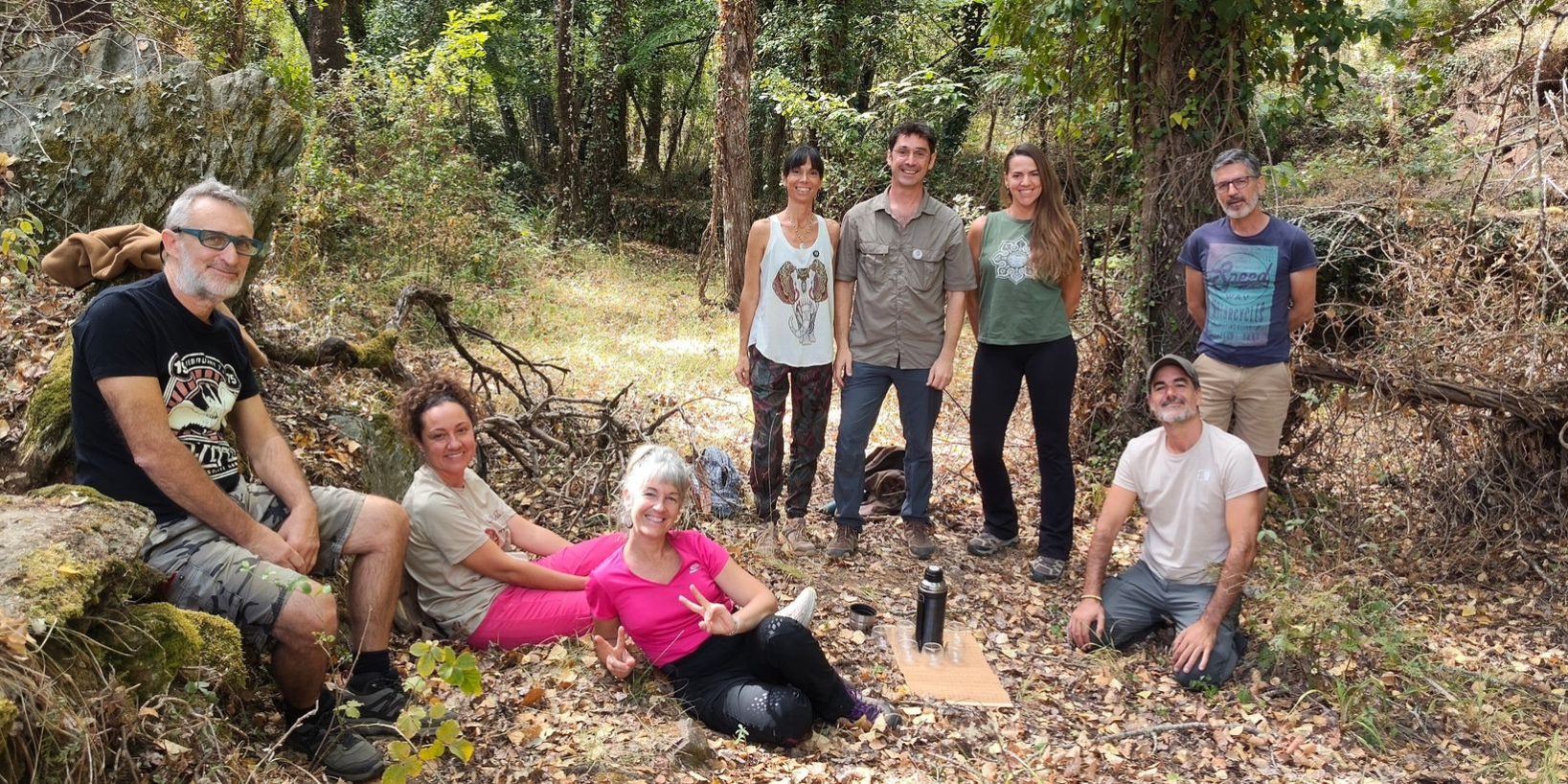
From 25 to 27 September, we held the ‘Fundamentals of Forest Bathing’ face-to-face training course in Villaonuba (Fuenteheridos, Huelva). We spent three days between the Villaonuba Botanical Gardens – home to over a hundred species brought from different parts of the world – and the chestnut groves, cork oaks and streams that surround it, right in the heart of the Sierra de Aracena. We wrote this account a few days later, with the experience still very much fresh in our minds.
The group came from very different backgrounds: people who work supporting others, someone who wanted to start out as a guide, and someone who was simply looking for a long weekend amongst the trees. What they had in common was their commitment and a keen sensitivity to what we were proposing. With a group like that, teaching feels very much like having a conversation.
Firstly, sharpen your perception
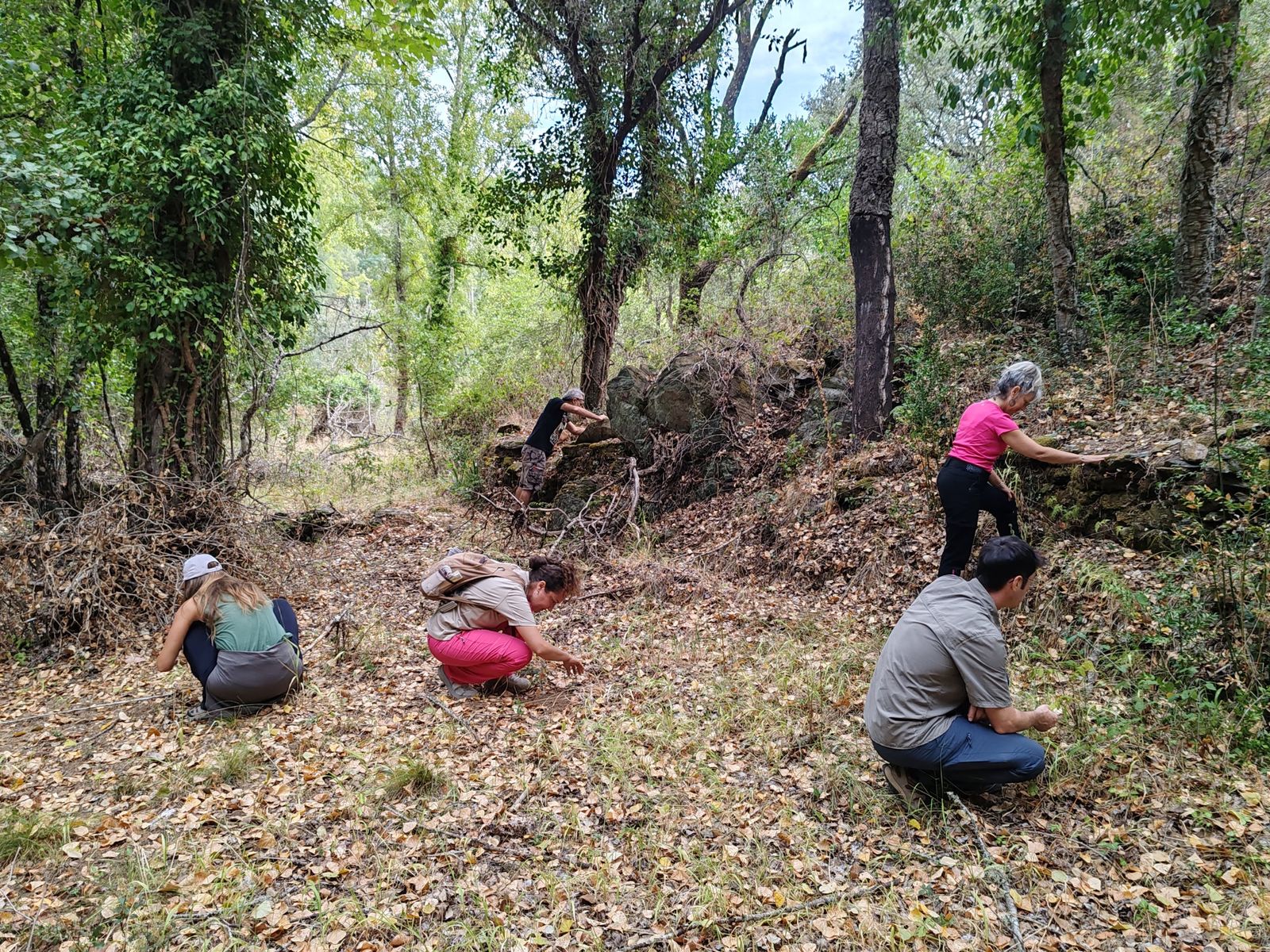
A forest bath does not begin with theory; it begins with the senses. We devote our first sessions to rediscovering something we all possess but rarely practise: the ability to pay attention calmly. Crouching down on the leaf litter, running your hand over a moss-covered stone, distinguishing scents after a moment’s silence, letting your gaze linger on a detail. The Sierra de Aracena is a bountiful setting for this: every metre of ground offers something to observe and naturally arouses curiosity without the need to force it.
Theory to help us understand what we do
Between sessions, we discuss the theoretical and philosophical foundations of ecopsychology and Forest Bathing (Shinrin Yoku): where the practice comes from, what the research says about its effects, what types of ecotherapy exist, and how to design a group session step by step.
We also devote a section to the framework within which guides in Spain operate: civil liability insurance, registration as an economic activity, group management and basic safety. And, above all, the limits of the role. A Baños de Bosque guide facilitates an experience in nature; they do not provide therapy. Being clear about this protects both participants and guides.
There was plenty of time to answer questions. Some of the best questions of the weekend came up right there.
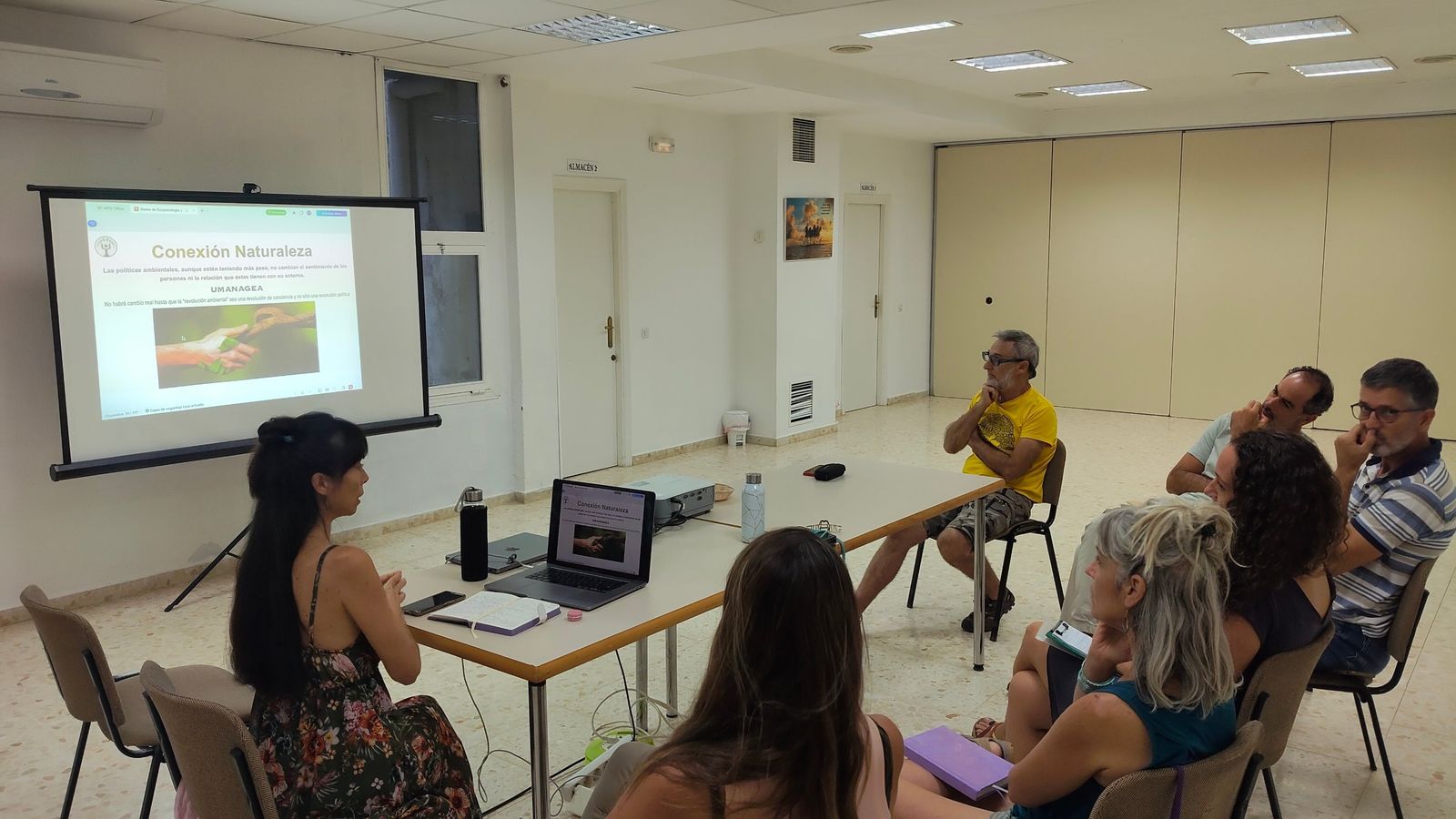
Before and after: asking rather than assuming
Before each session, and again at the end, each participant answered a few brief questions about how they were feeling. This is not a scientific study; it is an honest way of observing the effect of the experience rather than taking it for granted. Furthermore, it is a tool that every future guide can take back to their own sessions.
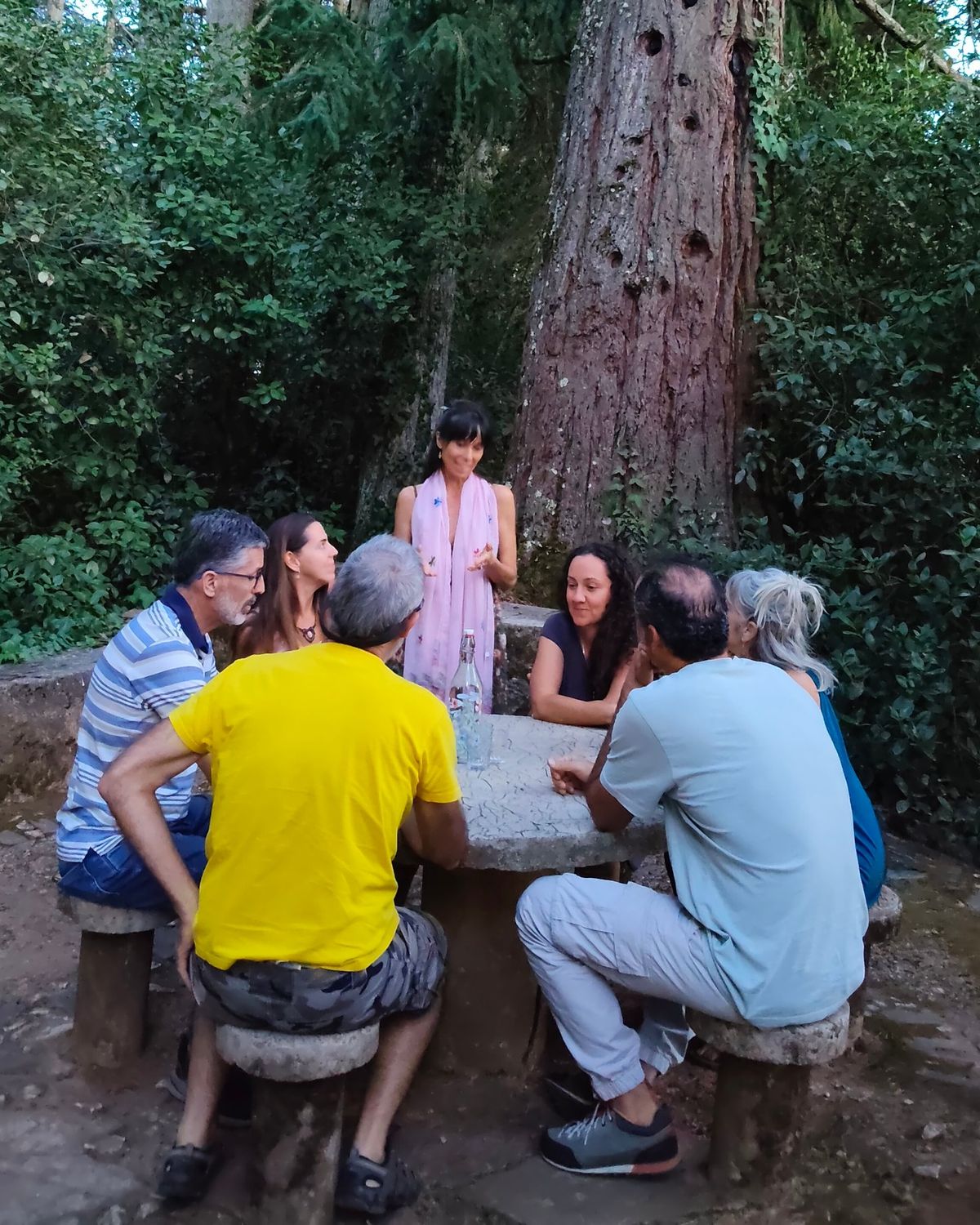
A sequoia and a group
We got to know one another around a stone table, at the foot of one of the garden’s sequoias, its trunk marked by holes made by woodpeckers. By the end of the course, nobody was just talking about what they’d learnt about trees: they were also talking about the people they’d walked with. The bonds between people are part of the natural world we inhabit.
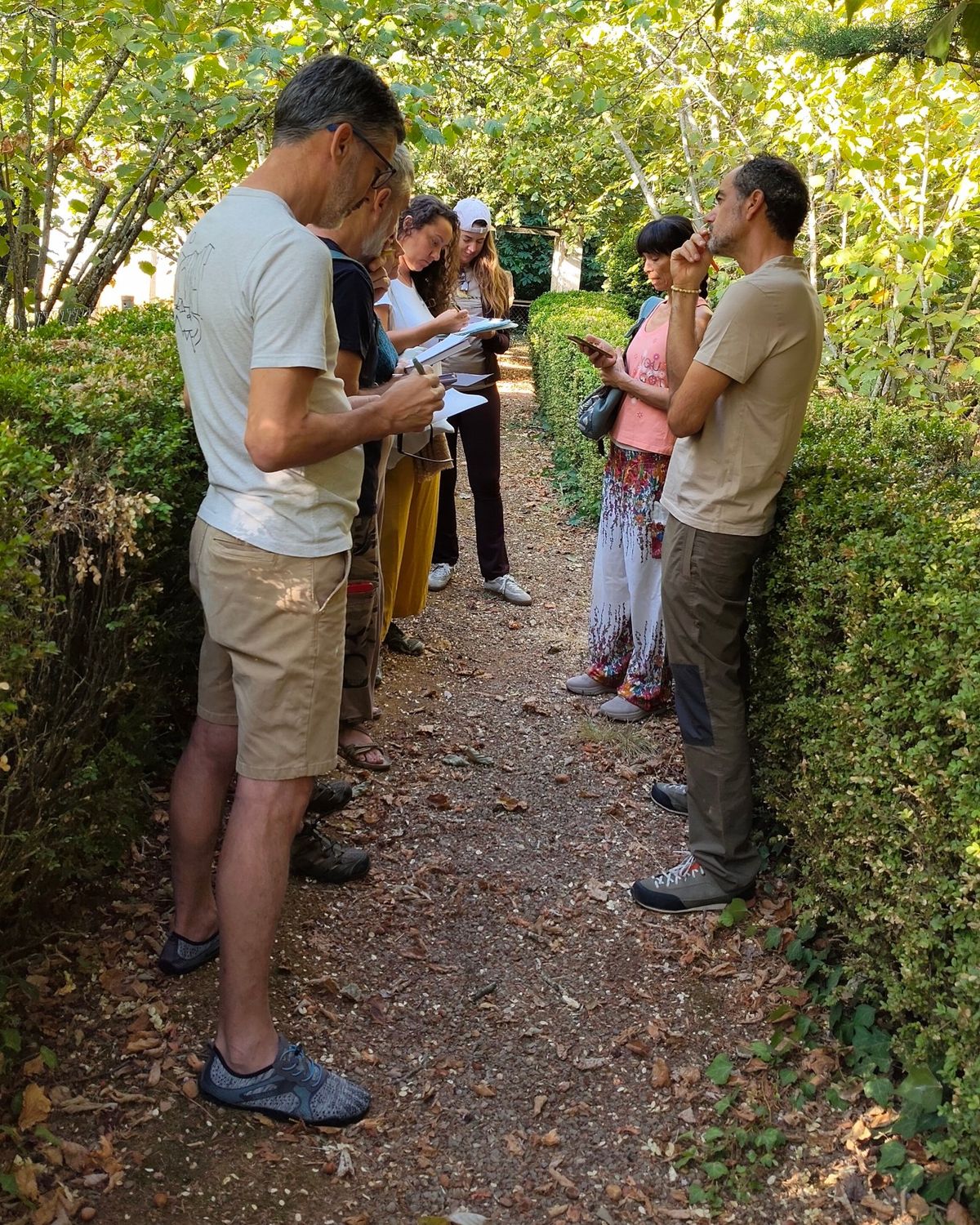
A forest bath can also be enjoyed in a garden
Not everyone has a forest on their doorstep. That’s why we also practise in the landscaped areas of Villaonuba, with paths, other people around and distractions. We learnt to maintain our focus when the environment makes it difficult, because many of the sessions our participants will lead will take place in urban parks and gardens. Sometimes it’s enough simply to lean against a tree trunk and stay still for long enough.
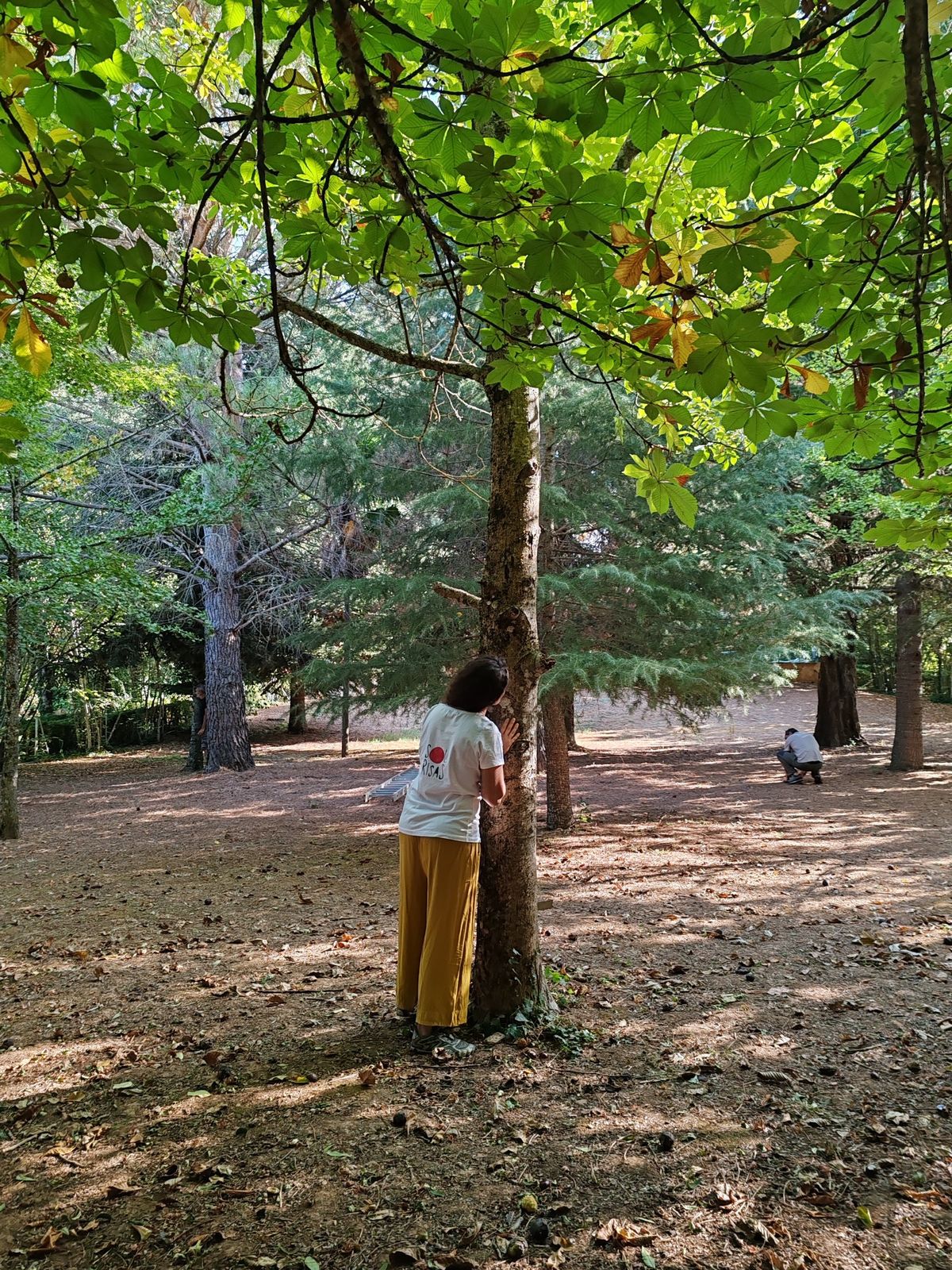
Listen
One of the moments that came up most often in our final conversations was the simplest one: sitting by the stream, each in their own spot, and listening. To the birds, the water, the wind in the treetops and, at times, one’s own heartbeat. Taking the time to hear what is always there.
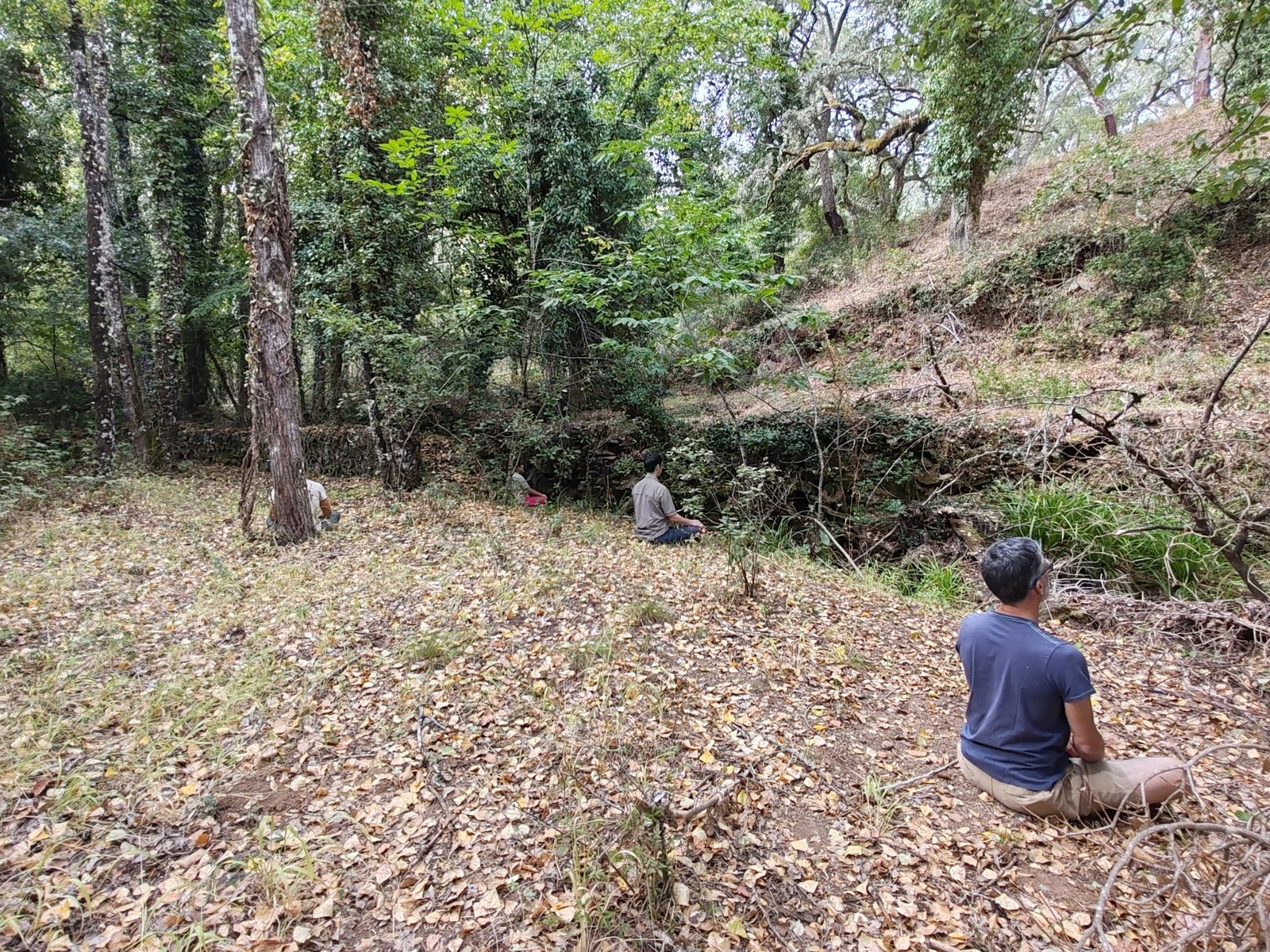
Remember that we are part of nature
One thought ran through the whole weekend: almost nothing we practise is new. It’s about rediscovering a sense of awareness and a way of being in the landscape that we already carry within us, but which we have gradually obscured with haste, screens and habits. Recalling this whilst walking as a group, slowly, amongst chestnut trees, is one of the most valuable experiences we can share.
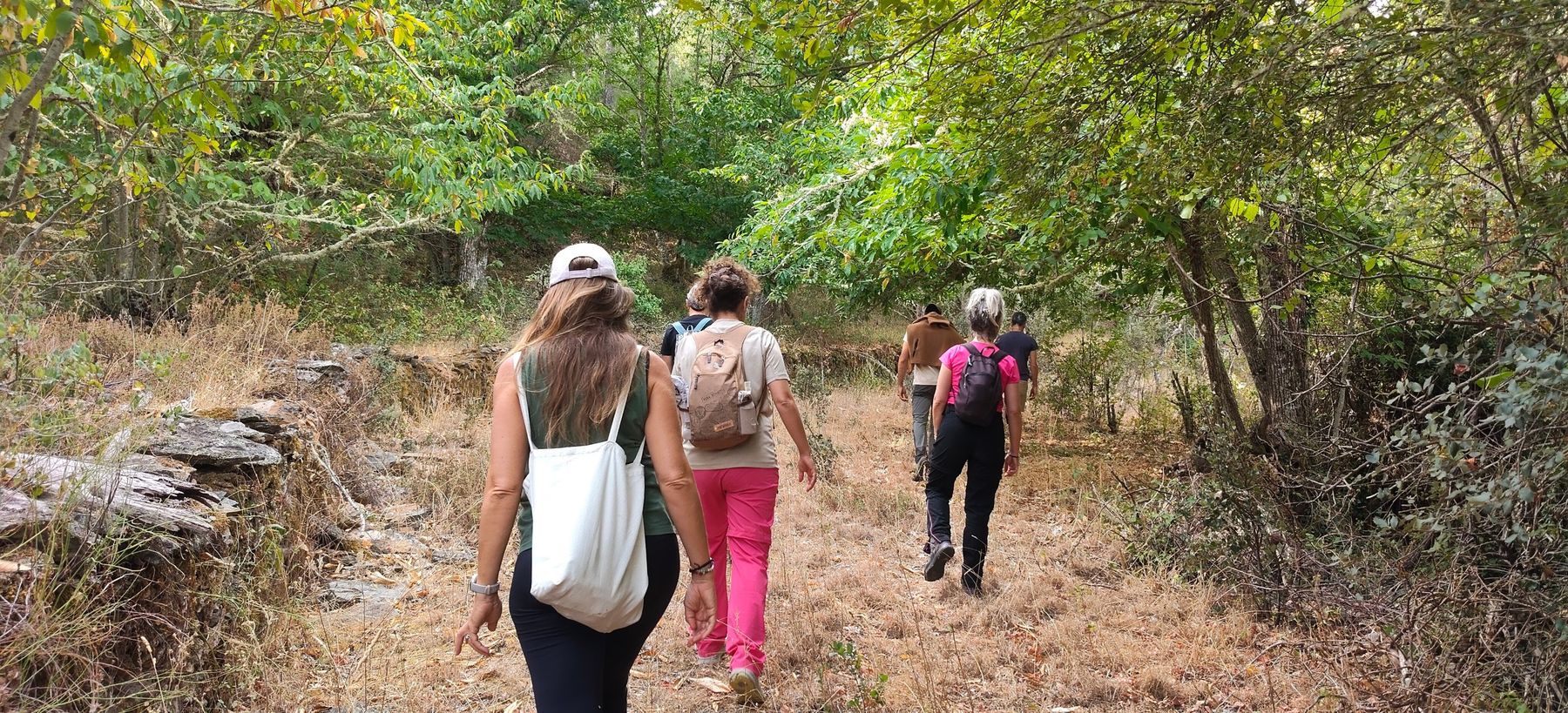
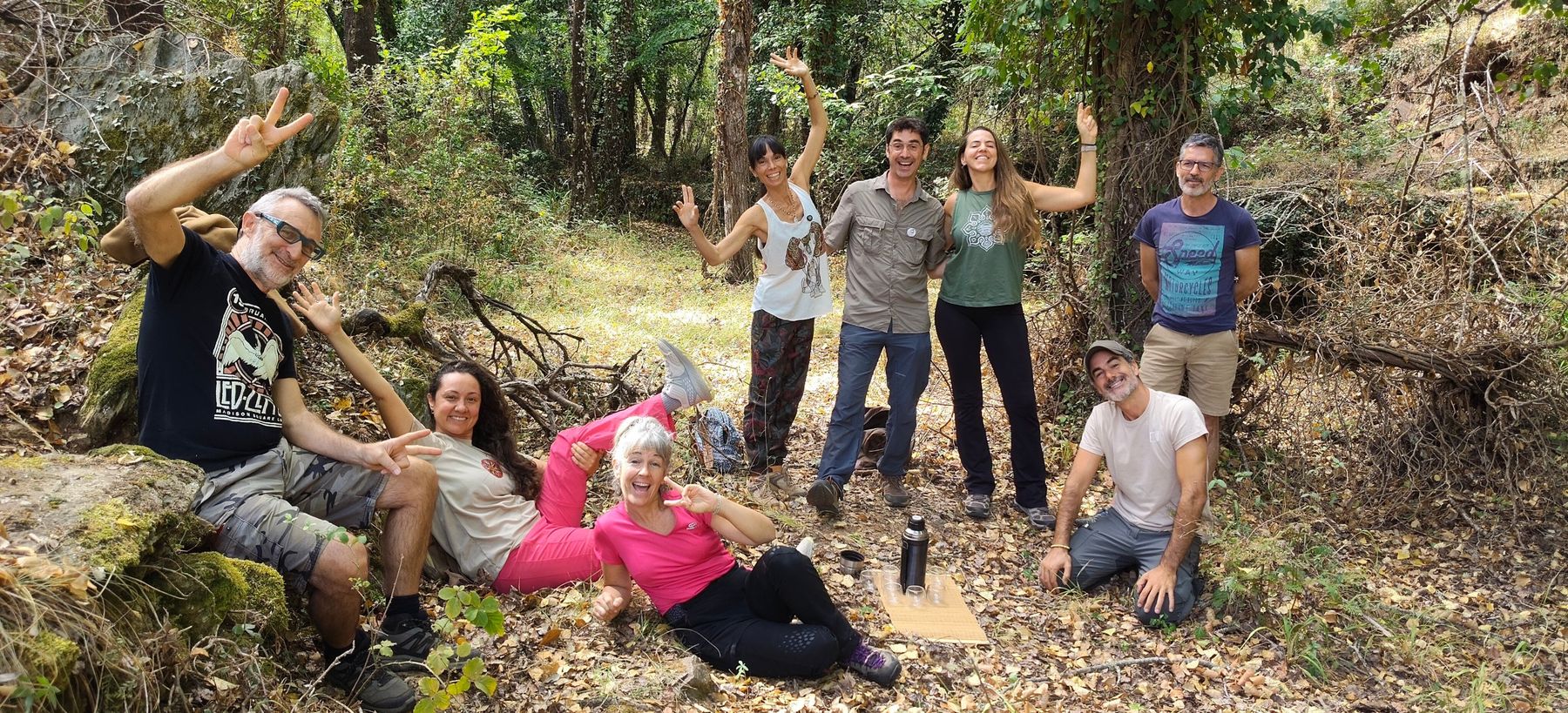
Thank you to each and every one of you who came along to this Forest Bathing workshop. It was a privilege to share our passion with you.
Continue your training at Baños de Bosque
Forest Bathing Basics, online at your own pace. The theoretical and practical foundation of this online course: 55 lessons and six PDF handbooks, covering everything from ecopsychology to how to facilitate a session. No start date and lifetime access. It is also one of the specialisations offered by Facilitadores de Naturaleza Habitada. View the course
‘Nature in the City’ Facilitator Training (200 hours). The full programme, which includes Forest Bathing alongside ecopsychology, ecosomatics and designing your own sessions. Pre-recorded content and live mentoring sessions. New intake: 19 January. Special price until 15 December. Further information
Umanagea, Holística Nature’s School of Inhabited Nature.