
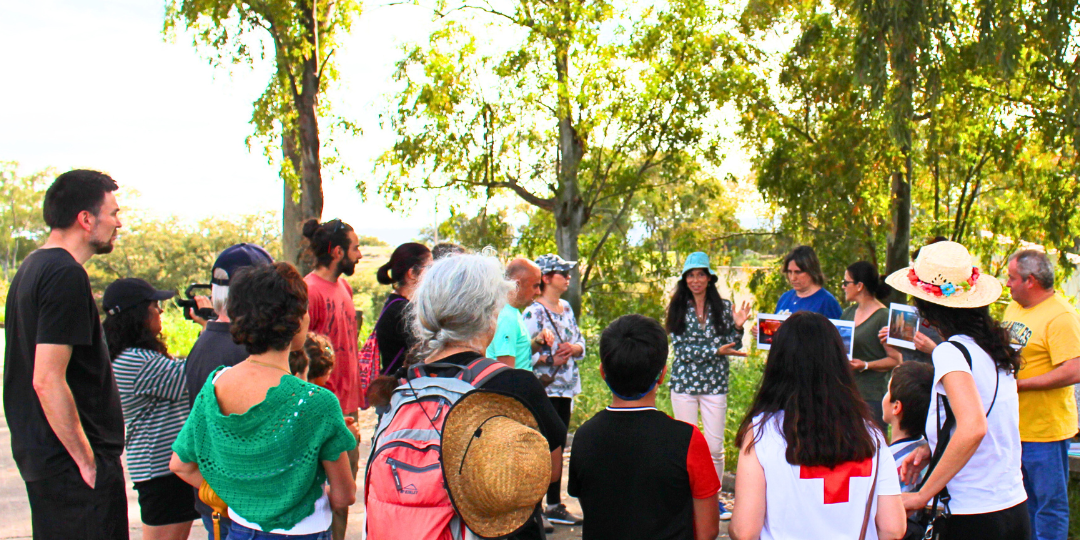
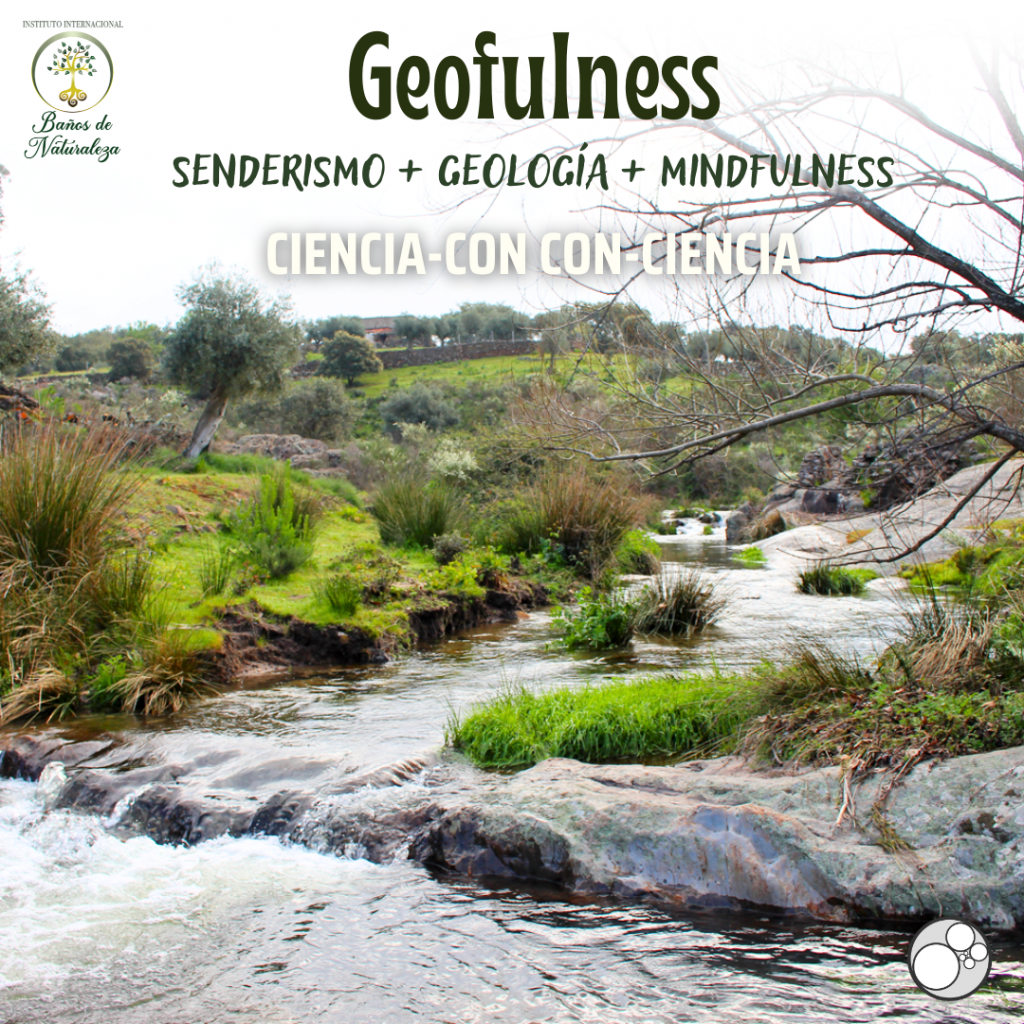
GEOFULNESS is a term coined by Dr Helena Chacón that establishes a new paradigm in the popularisation of Earth Sciences (Geology) and in nature-based methods of personal growth, such as forest bathing, Natural Mindfulness, etc. with an emphasis on abiotic aspects.
Geofulness combines geology with mindfulness (practices of «mindfulness») to establish a connection from the inside out and vice versa, offering participants the following benefits:
- Pain relief, improved posture and mobility through body awareness exercises
- Mindfulness exercises that improve concentration, bring mental clarity and set you up for better learning
- An understanding of the region’s geological history, the origin of the rocks around you, how they were formed, and what they can contribute to your own story.
- A sense of belonging to the planet and an improved mind–heart connection with «abiotic» aspects
- Appreciation and evaluation of geological heritage
- Time and self-reflection on personal issues that arise through geological explanations, which serve as analogies for our own process.
Geology: The Science of the Future
Geology is a science of great importance in today’s world. Many social and economic problems are linked in one way or another to planet Earth, its resources and their management. Climate change, floods, earthquakes, volcanic eruptions, the depletion of oil reserves, the mining of rare earth elements for technological purposes, soil degradation and desertification, water pollution, plastics in the ocean, etc. are just some of the problems we face.
The root of these problems lies, in part, in a lack of geological knowledge amongst the general public and public authorities. Understanding how our planet Earth works and respecting its processes is essential if we are to avoid facing the sixth mass extinction in history. But … how can we communicate geology in a way that makes a real impact and changes the way each person views their environment?
Outreach is a two-pronged process
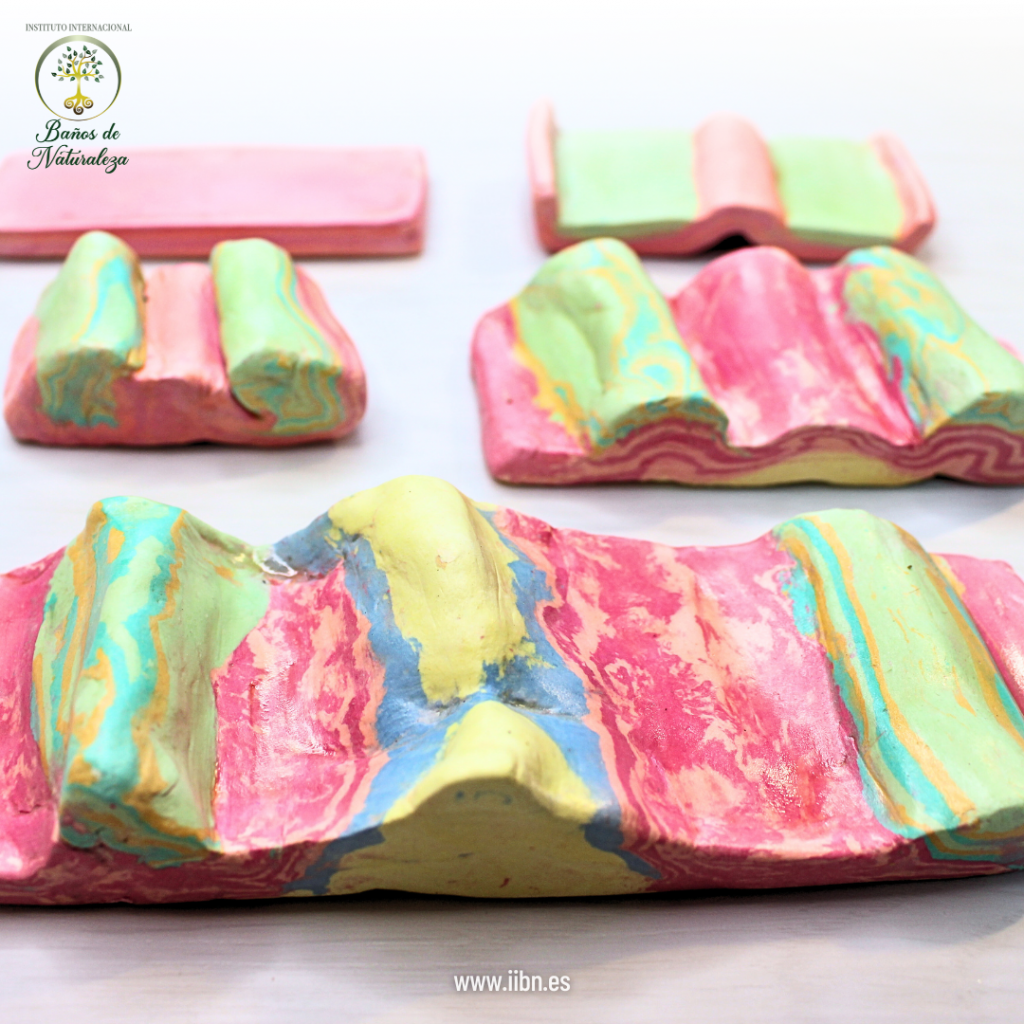
When it comes to teaching a subject such as geology, it is important to bear in mind that both the teacher and the learner play a vital role. The teacher – in this case, the geologist – needs teaching aids (illustrations, models, videos, samples) to accompany their explanations, making them easier to understand. It is much easier to «touch» a sample and «see» a model than to simply imagine them.
However, one factor that often goes unnoticed when we set out to teach a subject is the physical and mental state of the person listening. In order for us to fully appreciate a subject, our mind must be receptive, open, curious and malleable, and our body must be free from pain and maintained in a stable, comfortable and mindful posture. Otherwise, the listener will lack the capacity to grasp the complex spatio-temporal processes of geology. If we add to this the fact that, as a general rule, the «abiotic» world arouses less interest than the «biotic» world, we must make an effort to include interesting aspects in our discussion that connect with our listeners.
Geological Outreach. It’s not enough just to tell the story; you have to make the connection
A geologist is someone who has been trained over many years to develop a spatial and temporal perspective that is very different from that of the rest of the population. In terms of «neuroscience», we could say that their brain has undergone plastic changes to create new neural connections that enable them to think in terms of millions of years and enhance their three-dimensional perception. Thus, when a geologist looks at a rock, they not only see the minerals that make it up, but also how it was formed, which geological processes were involved, and what information it provides us with to understand not only the past but also the future of the region.
One of the main challenges facing geological outreach is the difficulty of conveying this spatial and temporal perspective in just a few minutes. Most people live in a time frame anchored in the few thousand years that are the figures we use when talking about «humanity», but when we talk about millions of years… things get complicated. It’s a bit like sums of money. If we’re talking in terms of thousands of euros, we can picture those amounts. But if we’re told about billions, generally speaking, we find it hard to take in…
As well as the time-related issue, we also have the spatial issues. As geologists, we see every mountain, every hillside and every river as interconnected and playing a role within the wider region. When we look at a geological map, we are able to interpret it by discerning its landforms, its folds, its faults and what came before and after. But for society at large, adopting such a broad perspective is difficult. Their view of the subsurface is static, fixed and unchanging – a layer of earth from which rocks simply emerge. There is no widespread understanding of the Earth’s layers or of plate tectonics, which provides a dynamic view of the planet. In this spatial context, people must first understand that rock is not something «static» but rather the result of complex physical and chemical factors arising from a rock cycle that has been creating, modifying and destroying rocks for millions of years. Above all, whilst an individual «rock» may be of interest to us because of the beauty of its minerals or fossils, what is truly important is its context and its relationship with other rocks, enabling us to understand the region’s fascinating geological history.
Furthermore, there is an additional problem that makes it difficult for society to develop a passion for geology, and that is what we call «connection gap». What is this? We humans are driven by emotions and feelings. You might not realise it, but that’s how it is. You only have to look at how the marketing of any product seeks to evoke an emotion in you. For example, perfumes stir up passion, travel agencies evoke happiness, certain cars convey a sense of wealth and power, and so on. When an ecotourism guide shows you the cubs of a lynx or points out edible plants or mushrooms, your interest is piqued and your attention is focused. However, stones do not stir our emotions, nor can they be eaten. We need to find a way to «bridge the connection gap», stir emotions and reach people’s hearts. Most people who communicate geology do so through reason, drawing on the marvellous scientific knowledge they have cultivated over the years, but they forget to incorporate «feeling», a «connection with people» and, above all, to facilitate «people’s connection with the Earth».
Geology + Mindfulness
To overcome the difficulties we face in communicating geology, we must «stir the emotions» and «touch people’s inner selves» in order to «connect them with the planet». In other words, we must reach their very core. In doing so, we transform the individual’s view of the ground and the environment, helping them to feel that they are part of a living planet and that caring for it is a way of caring for themselves. This is the aim of Geofulness, which uses tools from mindfulness, yoga and meditation in the context of a geological field trip, with the aim of first going within, then going outwards, and returning inwards to bring about inner change.
For more than 20 years, neuroscience has been investigating how mindfulness and body awareness techniques shape our brains. Specifically, we know that these tools reduce the hyper-reactivity of our limbic system (our emotional brain), activate the prefrontal cortex (attention) and link our inner feelings with our attention through the autobiographical experience of the cingulate cortex and the insula. When we engage in any activity that allows us to focus our attention on our «feelings» (interoception), our position in space and time (proprioception) and our senses (exteroception), this experience is better recorded in our memory (hippocampus), we are able to pay closer attention and be more curious, and we can form new neural connections.
If you try to explain geology to someone experiencing emotional distress, chronic stress or some form of trauma, their prefrontal cortex (responsible for attention) and their autobiographical capacity (the ability to feel that they are the one living through that experience) will be disconnected, and they will be unable to comprehend complex spatio-temporal explanations. Similarly, if the person feels «pain» in any part of their body, their attention will be focused on that rather than on the explanations. Providing tools that enable them to focus their mind, calm their emotions and reduce «nociceptive» pain are essential for the person to be able to self-regulate, be present and enjoy the experience.
Geofulness as a method for bridging the connectivity gap
On a Geofulness outing, we aim for you to learn about geology whilst improving your own inner well-being. To this end, we follow four sets of exercises focused on connecting with your body, your mind and the Earth sciences, which enable you to gradually move towards an experience of geological connection.
- Physical and mental preparation for learning
- To spark curiosity and showcase the beauty of geology
- Mindfulness of the senses in abiotic contexts
- Explaining geological processes by drawing parallels with human processes in order to evoke a «sense» of them and foster a «connection».
STEP ONE: Tuning into your body and your breath
It is difficult to learn about planet Earth when we do not know or feel our own bodies, which are our closest territory. By incorporating some body awareness exercises before or during a Geo-route, we prepare the participant and improve their concentration.
* Grounding or Rooting. Taking a few moments to become aware of the sensation in your feet and your contact with the ground allows you to connect with the rocks and the ground beneath you. As part of the Grounding exercises, we suggest swaying movements, individual and group balance poses, body awareness focusing on the feet, visualisations, and so on. These exercises are particularly useful for people who have just travelled by car and feel disconnected from their bodies.
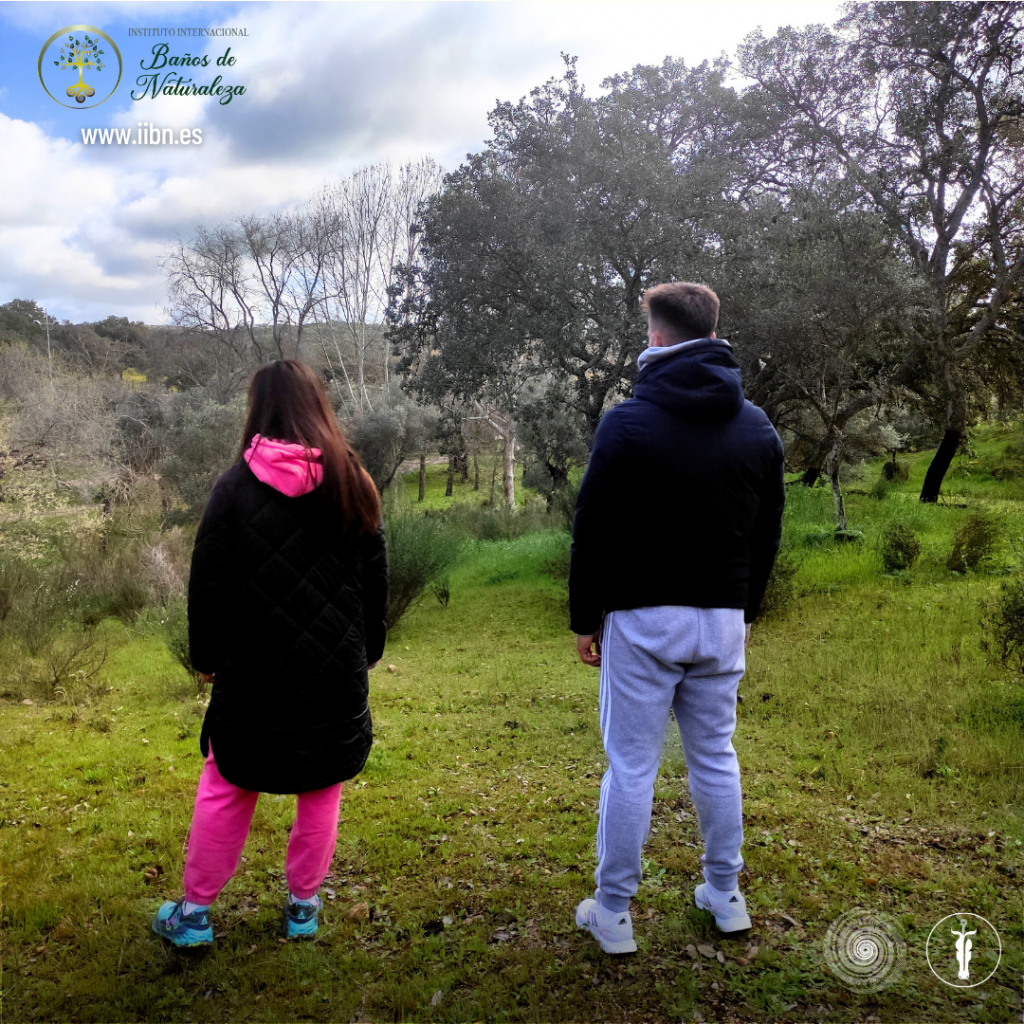
* Mindful Walking. The nature walks offer us the chance, on the one hand, to meet wonderful people to chat with, but also to spend a few moments walking in silence, slowly, observing our bodily sensations and our breathing as we do so. One of the exercises we use most on our walks is the ‘Afghan Walk’, which combines mindful walking with mindfulness and breathing.
*Mindfulness of the body and posture. Neuroscience has discovered that «feeling» one’s body helps to improve attention through the development of proprioception (spatial awareness). Through simple exercises to improve posture and somatic body movements (feeling the body), we can help a person ground themselves in the present moment by feeling their body as their «Earth», and from this place extend their attention to the location and the geological territory in which they find themselves. If we do not make this bodily connection, the person will participate in the activity solely through the mind, with a mindset full of thoughts, beliefs, conditioning, memories, etc., which will hinder their attention.
* Mindfulness of breathing. Breathing awareness exercises are very useful for regulating the autonomic nervous system. It is known that paying attention to how we breathe and performing breathing control exercises in which we lengthen the exhalation help to activate the ventral branch of the vagus nerve, which is responsible for the response of calmness and social connection. This state helps us to interact with the world around us with curiosity, enthusiasm and peace, and puts us in the right frame of mind for learning.
STEP TWO: Surprise and discover beauty
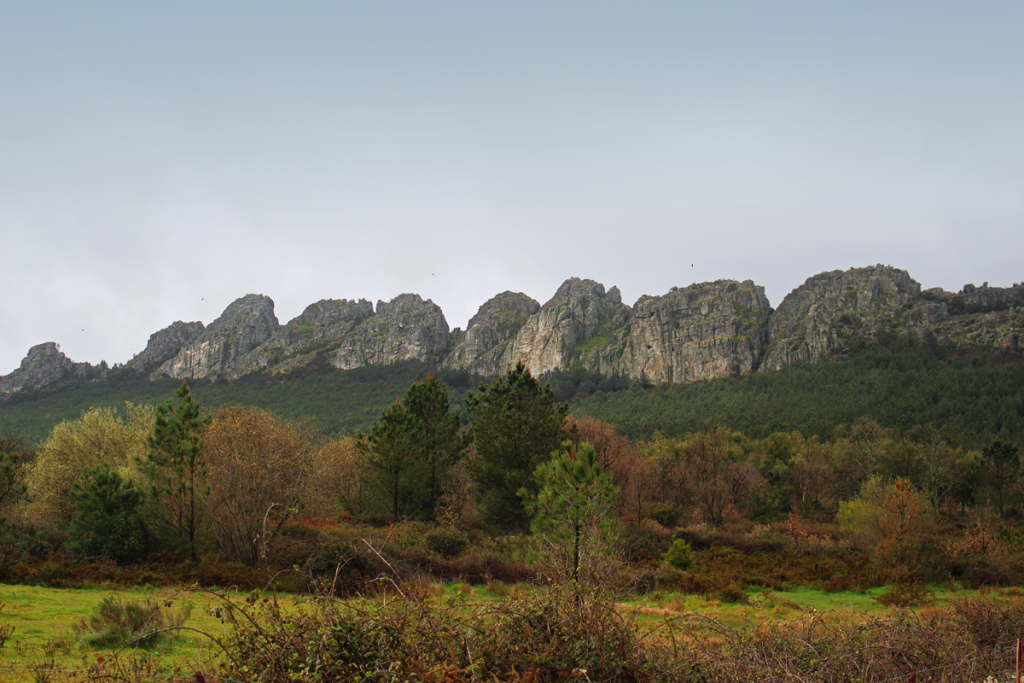
Once the body, breathing and mind are in the right frame of mind, it is time to focus our attention on geological features that amaze us with their scale, their intrinsic beauty and their forms. You will connect with an aesthetic sense that will awaken your senses, making you more attentive; we can achieve this by bringing along samples of beautiful minerals found in microscopic form within the rocks we are observing, well-preserved fossils, or even by appreciating the aesthetic appeal of a fold or a landform. In the context of «Forest Bathing», this aspect is known in English as «awe», which means surprise or admiration. Awakening this «feeling» in a geological context is important at this stage, as it enables the individual to maintain their interest and realise that a «rock» is not just a stone.
STEP THREE: Mindfulness of the senses in relation to abiotic aspects
Once our interest has been aroused, we learn to focus our attention on our senses without judgement or expectation. The idea here is for the individual to explore abiotic aspects by connecting with the feelings they evoke, without being influenced by scientific information. For example, we spend a few minutes listening to the sound of water in a stream and what it evokes in us. This sound might relax us or make us feel anxious, or bring back a childhood memory… Or we might observe and contemplate the contours of the landscape, feel and touch the rocks, and so on. In other words, we explore the subjectivity of the experience. In a consumer society, a Geological Outing can be another source of stress rather than a form of consumption (consuming data, information, etc.). By incorporating these exercises, we give people time to pause, observe and experience the moment with a sense of calm.
STEP FOUR: Explain geological processes by drawing parallels with the internal processes of the human body
Once the person is calm and focused, we proceed to explain the geological processes. To aid understanding, we use analogies with human processes that enable people to feel a sense of connection to what they are seeing and understanding.
For example, to explain the different types of rock and how they relate to one another, we use mental archetypes and symbolism that enable people to connect with them through the collective unconscious. One example of this is drawing on the elements of ancient Greek medicine, where igneous rocks represent the element of fire, sedimentary rocks the element of water, and metamorphic rocks the element of earth.
For example, in various spiritual traditions, the Fire Element is associated with the transformation that enables us to connect with our Gifts and Purpose (what the Japanese call Ikigai). We all have strengths in life – «things we’re good at» – which should be part of our lives to fill them with meaning. Transformation allows ideas or seeds that are taking shape within you – and which may take years to come to fruition – to finally «crystallise» into that project or new habit that makes you feel better and fulfils you as a human being. For such a project to finally come to fruition, it requires a period of «crystallisation», internalisation and a suitable environment (the people around you, social or economic conditions, etc.). .
This process is similar to that seen in plutonic igneous rocks such as granites. These rocks cool slowly at depth from an original magma, generally forming beautiful mineral crystals that are visible to the naked eye. If we compare this to the process of personal growth in a human being, the magma and its chemical composition represent our essential nature and gifts. We are all different in this respect. We may have a gift for music, a gift for dealing with people, the ability to memorise things quickly, or we may be artists. For our nature to express itself in the world, we must bring its existence to fruition through intention or purpose. What are we going to do with our gift? How am I going to incorporate it into my life? What am I going to use it for?
In plutonic rocks, each mineral grows around a microscopic seed. We could see this seed as the beginning of our idea or purpose. At first it is a simple idea… but over the course of months, you have gradually refined it, come to understand it and shaped it so that, little by little, it takes shape and comes to fruition. In rocks, we might find a similar process in the crystallisation of minerals, which requires time, depth (on an internal level) and a suitable environment. These conditions are also necessary for expressing our inner nature and purposes. It takes time, a process of personal introspection, and the right conditions to bring about the necessary changes that will manifest as ideas and projects aligned with our soul. If these conditions are not met, our ideas will not mature; we will have neither direction nor purpose in our lives, and life will become a sequence of explosive events. This is what happens with volcanic rocks, which did not have enough time or depth to form large crystals.
Through this analogy, a person can see granite as a rock that required time, maturation and the right environment to reveal the minerals that can be appreciated, and can reflect inwardly on whether they are devoting sufficient time and maturation to those processes or goals that they truly wish to «crystallise».
There are many other examples that allow us to draw parallels and use archetypes between geological and human processes. Faults speak to us of trauma or the severing of bonds; folds, of adaptability; rocky landforms of leadership and determination, river boulders illustrate the art of going with the flow of life, turbidites connect us to our inner storms and struggles, volcanoes speak to us of our anger and emotional outbursts, and orogenies represent our personal crises, and so on.
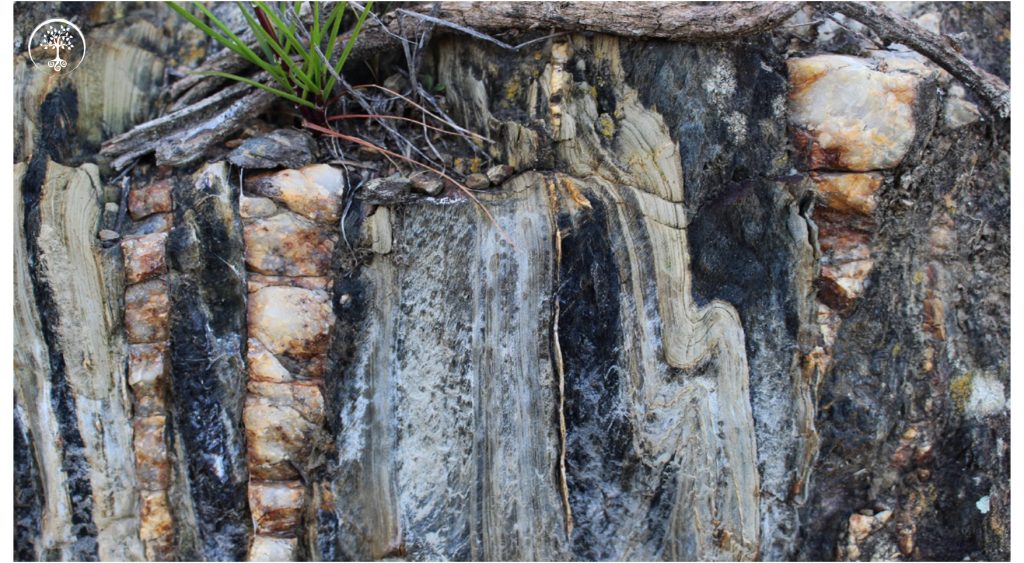
Through Geofulness, we discover a deeper understanding and connection between humans and the Earth, helping us to become more aware of our surroundings and to appreciate the rocks around us.
© Text written by Helena Chacón, PhD in Geology, yoga teacher and trainer, and certified forest bathing guide.
